
Group Therapy in Nashville
If you have attempted to get sober on your own and fell short, you are not alone. Addiction pulls people inward, away from family, friends, and healthy support systems. Group therapy in Nashville puts you in a room with others who are working through similar issues. At Nashville Wellness, sessions are guided by a licensed clinician who keeps the process structured and clinically focused. It’s not a support group. It’s a core part of how we treat addiction here.
Insurance Accepted



The Difference Between Group Therapy and Individual Therapy
Individual and group therapy serve distinct therapeutic purposes. Each one is effective as part of addiction treatment. One-on-one sessions focus on personal history, specific triggers, and co-occurring conditions. People are generally more comfortable discussing those topics in a private setting.
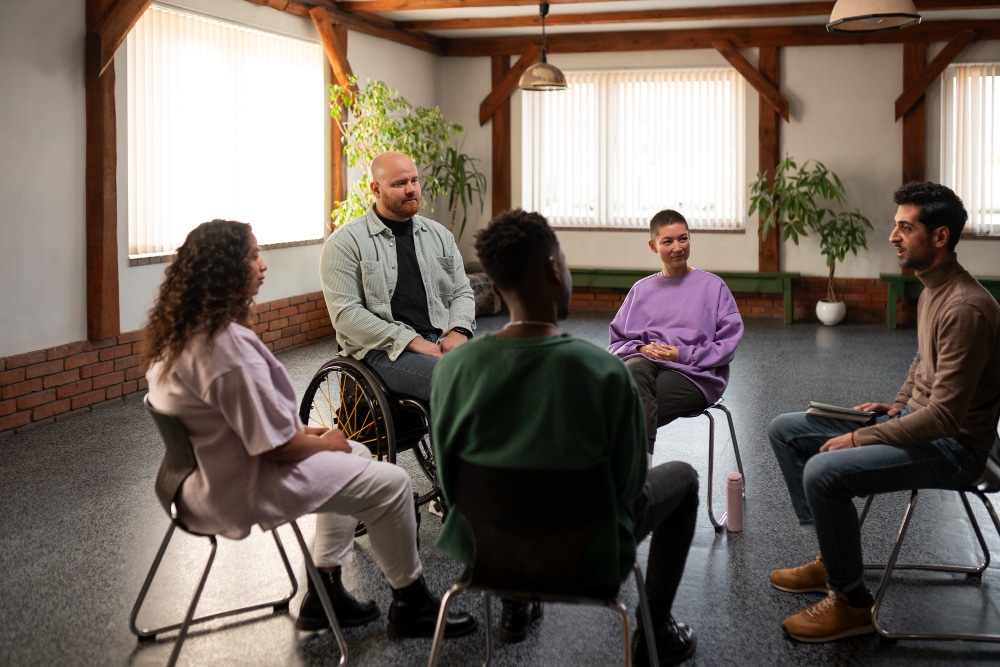
Group therapy involves small groups of individuals. In this setting, the therapeutic value lies in the shared experiences among participants. They encourage one another and provide feedback. They support accountability and the process of working through challenges for lasting change. Group therapy takes what’s uncovered there and puts it to work in a social setting. The discomfort of being honest in front of others, the experience of being heard without judgment, and the accountability of showing up consistently are all part of what makes group therapy clinically valuable.
The Benefits of Group Therapy for Addiction
Most people entering addiction treatment have never talked honestly about their substance use with anyone. Group therapy provides a space where participants hear from others and share their experiences. Initially, you may be hesitant to open up. As you hear others’ stories, you slowly become more comfortable and willing to share. You feel understood and never judged. The level of understanding between peers is what makes group sessions a vital part of recovery.
Maintaining sobriety also requires practical skills that must be learned. When you first enter care, you are used to reacting negatively by using substances. With group therapy, you gradually learn how to communicate what you are feeling. You start to develop coping techniques and skills to avoid slipping back into substance use.
Peer connections developed in a group setting are often long-term bonds. Most individuals maintain those friendships even after completing format programming. They know they have others they can count on when facing difficult situations. They also know they will be there for their friends when they need them.
What to Expect During Group Therapy Sessions in Nashville
Group therapy for addiction takes several forms, and each serves a different clinical purpose. Understanding what each type involves helps set realistic expectations before treatment begins. Not all group appointments look the same, and each is tailored to where patients are in the recovery process and to what the treatment plan calls for at that stage. Getting familiar with the different types before starting helps.
Psychoeducational groups focus on building knowledge. Sessions can include learning more about addiction, the recovery process, and the factors that influence both. Specific topics are covered, such as how substances affect the brain, what triggers cravings, and how co-occurring mental health conditions interact with substance use. These groups are particularly valuable early on in treatment when foundational knowledge matters most.
Process groups are less structured and more interpersonal. Participants share what they’re experiencing, respond to each other, and work through relational dynamics with therapeutic guidance. The therapist’s role shifts from educator to facilitator, creating space for honest exchange and reflection. Process groups are where much of the social and emotional skill-building happens, and they tend to become more impactful as trust builds over time.
Skills-based groups draw directly on evidence-based therapeutic models such as CBT and DBT. Sessions focus on teaching and practicing specific skills as a group. Time is given for role-playing and peer feedback. Distress tolerance, emotion regulation, and cognitive restructuring are among the most common skill areas covered. Dual diagnosis group therapy is often delivered in this format. Meetings focus on learning skills to manage substance use and mental health.
How Skills Are Built and Used in Addiction Group Therapy in Nashville
What you practice in addiction group therapy in Nashville are life-long skills. The techniques you build during sessions are the same ones you’ll need when a relationship gets difficult. You will need them when a craving hits at the wrong moment. They are handy when you’re navigating a situation where you used to drink or use drugs. Distress tolerance and honest communication aren’t abstract concepts here. You practice them with real people whose opinions matter to you, which is what makes the practice actually stick.
Reading about coping skills and actually using them under pressure are two different things. Setting a boundary in front of others, receiving feedback you didn’t expect, staying present through a difficult conversation without shutting down. You’re building something you can actually use. Our clinical team structures every group appointment at Nashville Wellness to create those moments deliberately. By the time you leave treatment, you’ve used these skills under pressure, not just talked about them.

Begin Group Therapy in Nashville Today
If you’re ready to stop going through addiction alone, group therapy in Nashville gives you a welcoming setting. Together, progress is possible as you work alongside people who understand your struggles. At Nashville Wellness, we provide tailored care plans to match your needs. Contact us today to speak with our admissions team. We are here to help and are happy to answer your questions, verify your insurance, and walk you through the admissions process.
Verify Your Insurance
Complete the form below for confidential access to our support team.
FAQs About Our Group Therapy Program
Here’s what most people want to know before starting group therapy at Nashville Wellness.
Participation in group therapy is guided but not forced. Clinicians create a structured environment where sharing is encouraged, but no one is required to disclose more than they're ready to. Comfort with the process typically builds as trust within the group develops.
Groups are kept intentionally small to maintain a clinical, focused environment. Smaller groups allow for more meaningful participation and give the facilitating clinician better visibility into how each person is engaging with the process.
Yes. Dual diagnosis group therapy is specifically structured to address co-occurring mental health conditions alongside substance use. Sessions integrate skills and topics relevant to both, and the clinical approach accounts for the added complexity of treating two conditions simultaneously.
Group therapy runs alongside individual therapy and other clinical services as part of a coordinated treatment plan. Sessions are scheduled deliberately so that what's covered in group reinforces what's being worked on individually. Nothing operates in isolation.
Yes. Group therapy is available through aftercare programming at Nashville Wellness. Continuing group sessions after residential treatment provides ongoing accountability and peer support during the transition back to daily life.